
ODO: 352,665
Back in the campground, we settle into the rhythm of things. Around 7am Europeans start yell talking to each other. At 7:45am a train sounds its horn for a very long time. Between 8-9am a lady walks her cat on a leash through the trees at the back of the campground. Between 9:30-10am we turn on the truck to air up our tire. After that, the chaos of the day reins.
Berne recovers a little more each day. He starts to eat solid foods multiple times a day. After this, we test his stamina with a short outing to the grocery store. He doesn’t crash afterwards, which is exciting. We’re taking it slow with lots of liquids, some gentle foods, and lots of rest. Do we miss the hotel buffet breakfast, and oxygen filled rooms? Of course! But we’re also happy to be back in our own bed, in our tiny house. Which would have fit inside our first hotel room several times over.
KoKo, being not sick, takes small outings to keep her sanity. There are four archeological sites near the campground, so she makes an afternoon of them:
Q’enco Archaeological Complex is a temple to Pachamama that is built inside a rock. The site is small, but very different from anything else so far. No Inca stone work, just carved seating, literally inside a giant rock.
Tambomachay is a sacred water temple. A short walk up a hill reveals two different, still functional, water fountains on the side of the hill.


Puka Pukara Archaeological Complex is a military complex and where people paid their “taxes” to the empire when they came to the area. It’s situated on a hill, with a good view of the surrounding area.


All of this was facilitated through a taxi driver/guide who found her at Sacsayhuaman. It was a cool enough site that she went back to explore the far side that we missed the first time. One the way home from this adventure, there is one more stop: A community revitalization project helping locals bring back traditional textile techniques and animal care and rehab. They had a variety of llamas and alpacas. They even have guanaco and vicuña (the wild versions). The vicuña need to be set free every few years because they get too stressed out in captivity, and have heart attacks. They also produce the softest, and most expensive fur. There were also two Andean Condors that were begin rehabilitated, who are set for reintroduction to the Colca Canyon area.

Back at the campground, Berne is feeling up for a little adventure himself, so we head for dinner in town. He’s picked out a test for his tummy at Bistro 138. Dairy. Well, technically, mac and cheese, but it’s really good mac and cheese, which means lots of dairy. We get two pastas and a pizza with the plan of having leftovers for tomorrow, because Berne wants to try and drive.

We take it slow this morning, trying to feel out what condition Berne is in. He successfully farted last night, so we’re cautiously optimistic. We pack and hit the road, back on our ancient architecture tour. The town of Pisac is roughly an hour away, our first stop, and the end of the Sacred Valley. Our plan is to work our way back towards Ollantaytambo, the start of the Sacred Valley. Pisac is bigger than Machu Picchu, but far less grand. There are signature Inca terraces, and a very normal town, no giant intricately fit stones. We make a deal that we will only stay for an hour, to not push Berne too hard. We bought a bottle of oxygen to help us hike the hikes we plan to hike today, but we forgot it in the truck, so we suffer while trying to move with haste.


Back in the truck, we do a quick check in to see if we continue or not. We continue. We need to hustle, next on the map is Maras and their salt mines, which are going to close shortly after we arrive. The drive through the Sacred Valley in gorgeous. There are lots of glacier covered mountain peaks, and green farms, with red dirt, and the river. We arrive at the salt mines to learn Goggle Maps has the wrong hours, and we have lots of time! We wander and take lots of pictures. The salt mines have been worked since Inca times. The stream brings brackish water to the hillside, which is carved into hundreds of pools, for evaporative salt collection. The community works the mines together, and the salt is mainly used for agriculture, and then food.


On to our final stop of the day, Moray, the Inca test farm, and temple (temple is archeology/art history code for “we don’t know what this was used for”). This place closed an hour ago, which again, Google Maps got wrong. The entrance worker is kind, and lets us in if we promise to be quick about it. We do our best, but all of these places are so neat, and different, its hard. Moray is a set of circular terraces that were used to create micro climates where the temperature could vary as much as 15C between the terraces. We don’t descend to them because we know we cant hustle back up the hill. The sun puts on a lovely sunset while we’re here.


Camp for the night is a parking lot in Ollantaytambo so we’re close to our final ruins of the tour. Berne charms a local cop into letting us park in the town square so we can grab dinner. Not knowing what exactly Berne will tolerate, we opt for food tour! Our main course includes alpaca, which Berne, with his new found super smelling, says “doesn’t smell right”, so we don’t eat it.
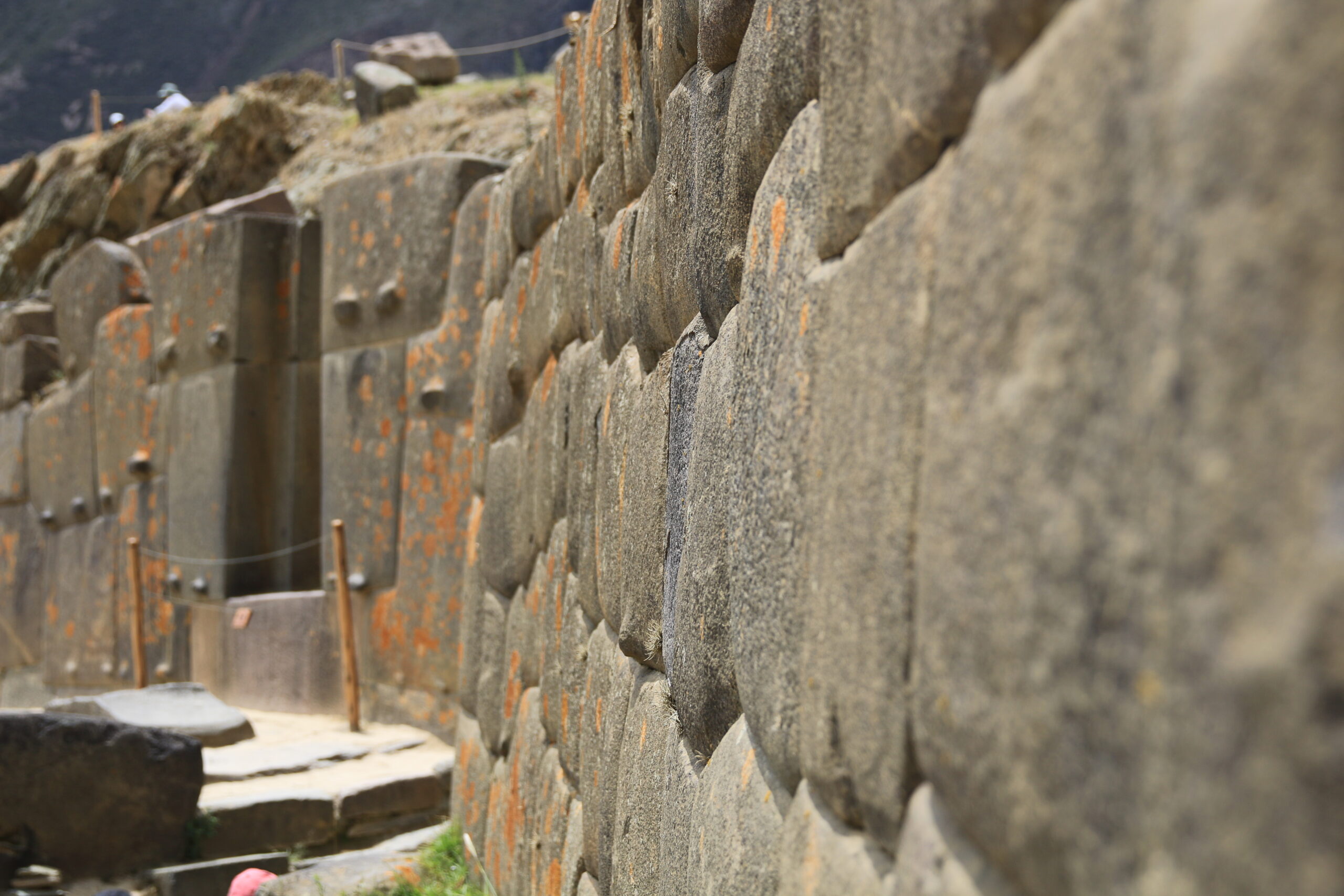
Originally, Ollantaytambo was an Inca town in the bottom of the valley until Emperor Pachacuti, the builder of Machu Picchu, decided to level it, and rebuild it on the hillside. The current, inhabited town, is still roughly the same size and in the same location as the original town. After a very quick, and not sustainable breakfast, we make for the ruins. Climbing up through the seventeen terraces, we aren’t as winded as we worried we would be! The highlights are the Wall of Ten Niches, and the Sun Temple. Half of the upper site is closed, so we make our way, very slowly, back down the steep stone steps. The lower site contains two water fountains, and a small, but mighty, fast moving river with stone bridges crisscrossing it. Our insufficient breakfast forces us to be done a little sooner than we were planning, so back into town for a proper, and very delicious meal. And that’s it. We’re done in the Sacred Valley, and done in Peru. Our road into the Amazon takes us up and through even more mountains, as if Peru wasn’t made of mountains already. We spend the night at 13,500ft in the yard of a hostel.


We have big plans to make blueberry pancakes for breakfast, but the yard here is meh, so we pack and hit the road. We’re on the clock for these pancakes so our blueberries don’t go bad. Puerto Maldonado is six hours away, and the heart of the Peruvian Amazon. This is the plan. To get there, we need to finish with the mountains. More up, and more up, brings us to our peak of 15,500ft, after which we immediately start to drop. The first hour after the peak drops us 7500ft. The first hour. We see electric blue jungle butterflies along the side of the road. It’s almost impossible to photograph a butterfly. Over the course of the day, we drop down below 700ft, and go from 40F degrees to 81F and 80% humidity. It’s a rough transition, but at least there is plenty of oxygen.

It’s after dark by the time we get to Puerto Maldonado. The highway is tough once we get close to town, so many tuk-tuks, motorcycles and small cars with no lights. Very stressful. It’s getting late, and we’re tired, so we pick up some Chinese food for dinner. To try and lessen the transition, we opt for a hotel tonight with some air conditioning. This turns out to be a great idea, because tonight is KoKo’s turn to be violently ill. We spend an additional day and night in this hotel so she has time to recover. Maybe if we stop staying in hotels, we’ll stop getting sick?
